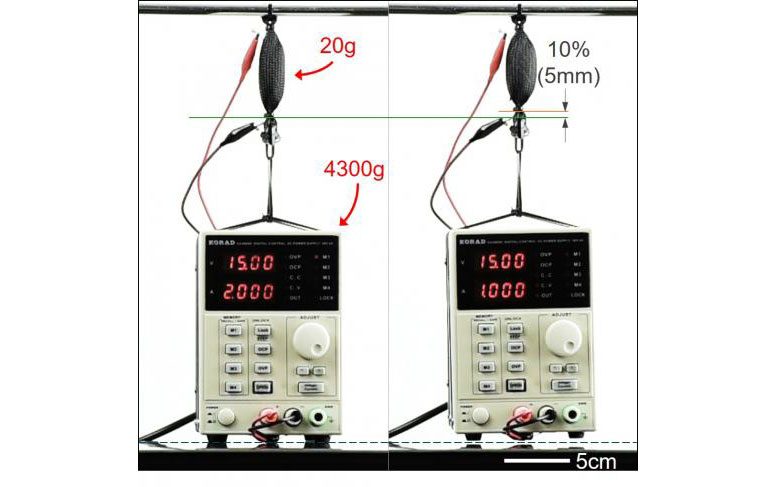
for his or her paintings on a gentle robot device which could carry more than 200 times its weight, adam bilodeau, prof. rebecca kramer-bottiglio, and two collaborators at columbia university have been these days awarded best pupil paper on the ieee global convention on gentle robotics.
the paper, “all-gentle material system for strong gentle actuators,” is based on work in kramer-bottiglio’s lab combining a heating composite they’ve developed with an actuator created in a lab at columbia. the aggregate resulted in a brand new, silicone-primarily based cloth that’s completely smooth and electrically inspired. it produces forces akin to well-mounted pneumatically powered smooth robots without the need for bulky components which include air compressors.
“tender roboticists were searching for new actuator technology,” said kramer-bottiglio, assistant professor of mechanical engineering & materials technological know-how. she and adam bilodeau, a graduate researcher, labored on the machine with columbia roboticists hod lipson and aslan miriyev. the columbia lab had formerly advanced a new actuator – a device that turns energy into mechanical work – made from silicone that expands while heated. a rigid cord walking through the cloth served as the warmth supply.
the researchers advanced upon this material machine by replacing the inflexible wire with a low-value, joule heating silicone advanced in kramer-bottiglio’s lab. by using mixing a conductive filler with the silicone, they created a rubber cloth that conducts strength with just sufficient resistance to convert the electric power into warmness. the heating composite became incorporated into the actuator using diverse designs, permitting the warmth to unfold frivolously at some stage in the actuator and likely improving the efficiency of the heater over the preceding layout.
“it’s a way of taking that heater wire and changing it with some thing much greater powerful,” bilodeau said.
the heating composite additionally improves on the previous design due to the fact it is able to be 3-d printed. this opens up numerous opportunities for constructing new, complicated fabric actuators with increased efficiency. due to the fact each the heating cloth from yale and the actuator from columbia have similar chemistry – both are silicone rubber – there’s a compatibility among the 2 that enhances the printability of the entire system.
“we’re seeking to integrate both substances extra intricately inside the destiny,” kramer-bottiglio said, including that the distribution of the heating fabric might resemble “veins and capillaries in the course of the device.”
relying on how they sample the heating cloth into the actuator cloth, she said, there’s the ability to use it as each a heater and a sensor. “we’re running in the direction of multi-useful soft materials, and we’re thankful that this contribution was recognized by way of the tender robotics network,” kramer-bottiglio stated.
securing the researchers’ self assurance in the device turned into its capacity to lift its very own energy deliver – extra than 200 times its personal weight – a feat of power extraordinary within the gentle robotics subject.
in preferred, smooth robotics holds amazing promise for numerous applications, such as human-robotic interaction (wherein safety is built in at the fabric stage), soft exoskeletons and different wearable technologies, and resilient robots that could continue to exist impacts and falls.
Tuesday, June 19, 2018
Engineers Develop Soft Robot That Can Carry Its Own Power Supply material systems for strong gentle actuators.
 Engineers Develop Soft Robot That Can Carry Its Own Power Supply material systems for strong gentle actuators.
Unknown
5.0
stars based on
35
reviews
for his or her paintings on a gentle robot device which could carry more than 200 times its weight, adam bilodeau, prof. rebecca kramer-bot...
Engineers Develop Soft Robot That Can Carry Its Own Power Supply material systems for strong gentle actuators.
Unknown
5.0
stars based on
35
reviews
for his or her paintings on a gentle robot device which could carry more than 200 times its weight, adam bilodeau, prof. rebecca kramer-bot...

Subscribe to:
Post Comments (Atom)

EmoticonEmoticon