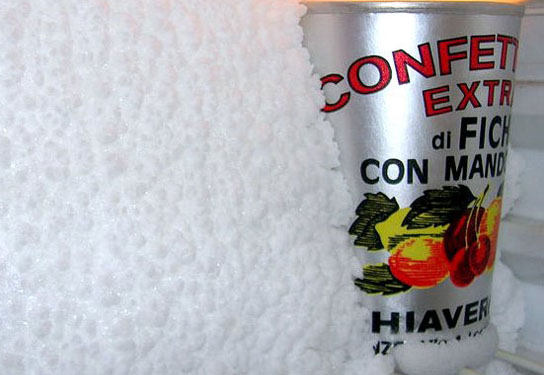
a team of cloth technological know-how engineers from harvard developed slips (slippery liquid infused porous surfaces), a era that may prevent ice sheets from developing on metal surfaces and sliding off resultseasily in the event that they do develop.
cambridge, massachusetts – a team of researchers from harvard university have invented a way to keep any metallic floor free of ice and frost. the dealt with surfaces speedy shed even tiny, incipient condensation droplets or frost genuinely via gravity. the generation prevents ice sheets from developing on surfaces—and any ice that does shape, slides off effects.
the discovery, posted online as a just-well-known-manuscript in acs nano on june 10, has direct implications for a wide style of metal surfaces including the ones used in refrigeration structures, wind turbines, plane, marine vessels, and the development enterprise.
the institution, led with the aid of joanna aizenberg, amy smith berylson professor of substances technology on the harvard college of engineering and applied sciences (seas) and a core faculty member on the wyss institute for biologically stimulated engineering at harvard, previously delivered the idea that it turned into feasible to create a floor that completely averted ice with ice-repellent coatings, inspired with the aid of the water repellent lotus leaf. but this approach can fail under high humidity as the floor textures emerge as lined with condensation and frost.
“the shortage of any practical manner to take away the intrinsic defects and inhomogeneities that contribute to liquid condensation, pinning, freezing, and strong adhesion, have raised the query of whether any solid floor (regardless of its topography or remedy) can ever be genuinely ice-preventive, specially at excessive-humidity, frost-forming conditions,” aizenberg stated.
to combat this hassle, the researchers these days invented a appreciably unique era that is proper for both excessive humidity and severe strain, known as slips (slippery liquid infused porous surfaces). slips are designed to expose a disorder-loose, molecularly flat liquid interface, immobilized through a hidden nanostructured strong. on these ultra easy slippery surfaces fluids and solids alike—inclusive of water drops, condensation, frost, or even solid ice—can slide off without difficulty.
the task was to apply this technology to metallic surfaces, mainly as these substances are ubiquitous in our cutting-edge global, from airplane wings to railings. aizenberg and her team developed a manner to coat the steel with a tough cloth that the lubricant can adhere to. the coating can be finely sculpted to lock in the lubricant and can be applied over a huge scale, on arbitrarily shaped metallic surfaces. similarly, the coating is non-toxic and anti-corrosive.
researchers create ultra slippery anti-ice and anti-frost surfaces
parent 1: still pics extracted from the movies simulating ice formation by deep freezing (-10°c) in excessive humidity circumstance (60% rh) and next deicing through heating.
to demonstrate the robustness of the generation, the researchers efficiently applied it to refrigerator cooling fins and tested it beneath a prolonged, deep freeze circumstance. as compared to existing “frost-free” cooling systems, their innovation absolutely averted frost a ways greater successfully and for a longer time.
“unlike lotus leaf-inspired icephobic surfaces, which fail below high humidity situations, slips-primarily based icephobic materials, as our effects advise, can absolutely save you ice formation at temperatures slightly beneath zero°c even as dramatically decreasing ice accumulation and adhesion under deep freezing, frost-forming situations,” said aizenberg.
similarly to taking into account the green elimination of ice, the era lowers the strength charges related by means of numerous orders of importance. accordingly, the quite simply scalable method to slippery metallic surfaces holds remarkable promise for wide application in the refrigeration and aviation enterprise and in other high-humidity environments in which an icephobic floor is appropriate.
scalable method to immediately coat aluminum surface with nanostructured polymer layer
discern 2: a scalable technique to without delay coat aluminum surface with nanostructured polymer layer ultimately converted right into a slippery liquid-infused porous surface (slips) is proven. slips can correctly postpone ice accumulation and facilitate elimination of ice even beneath excessive humidity situations.
as an example, as soon as their era is carried out to a floor, ice on roofs, wires, outside symptoms, and wind turbines will be easily removed simply by way of tilting, mild agitation, or maybe wind and vibrations.
“this new approach to icephobic materials is a actually disruptive idea that gives a manner to make a transformative impact on power and protection prices related to ice, and we're actively working with the refrigeration and aviation industries to convey it to market,” said aizenberg.
aizenberg is likewise professor of chemistry and chemical biology within the branch of chemistry and chemical biology, and susan s. and kenneth l. wallach professor at the radcliffe institute for advanced have a look at, and director of the kavli institute for bionano science and generation at harvard. her co-authors covered philseok kim, a era improvement fellow at the wyss institute and seas; tak-sing wong of the wyss institute and seas; jack alvarenga of the wyss institute; michael j. kreder of the wyss institute; and wilmer e. adorno-martinez of college of puerto rico.
the authors acquired aid from the materials studies technology and engineering center (mrsec) at harvard underneath nsf award #dmr-1005022. a part of this paintings become completed at the center for nanoscale systems (cns) at harvard supported below nsf award #ecs-0335765. further, the team recognizes the croucher foundation postdoctoral fellowship; the reu bridge, co-funded by way of the guarantee software of the dod in partnership with the nsf reu website online program under nsf provide #dmr-1005022.
Tuesday, July 31, 2018
SLIPS Prevents Ice from Sticking on Metal Surfaces discovery posted online as a just well-known manuscript.
 SLIPS Prevents Ice from Sticking on Metal Surfaces discovery posted online as a just well-known manuscript.
Unknown
5.0
stars based on
35
reviews
a team of cloth technological know-how engineers from harvard developed slips (slippery liquid infused porous surfaces), a era that may pre...
SLIPS Prevents Ice from Sticking on Metal Surfaces discovery posted online as a just well-known manuscript.
Unknown
5.0
stars based on
35
reviews
a team of cloth technological know-how engineers from harvard developed slips (slippery liquid infused porous surfaces), a era that may pre...

This Is The Newest Post
Subscribe to:
Post Comments (Atom)

EmoticonEmoticon