like earth, space has weather. except as opposed to swirling winds and downpours of precipitation, space weather is described through transferring electric and magnetic fields and rains of charged debris. at the very starting of space, starting simply 60 miles above earth’s surface, there’s a layer of the surroundings that shifts and adjustments in live performance with both types of weather.
above the ozone layer, the ionosphere is a part of earth’s ecosystem where debris were cooked into a sea of electrically-charged electrons and ions with the aid of the solar’s radiation. the ionosphere is commingled with the very maximum — and pretty skinny — layers of earth’s impartial upper ecosystem, making this vicinity a place this is continuously in flux present process the rush-and-pull among earth’s conditions and people in area. increasingly more, these layers of close to-earth space are part of the human area, as it’s home no longer simplest to astronauts, however to radio signals used to manual airplanes and ships, and satellites that offer our communications and gps structures. understanding the essential techniques that govern our higher surroundings and ionosphere is crucial to enhance situational cognizance that facilitates defend astronauts, spacecraft and people at the ground.
two new nasa missions are teaming up to explore this little-understood area that’s close to domestic but traditionally difficult to study. the global-scale observations of the limb and disk, or gold, instrument launches aboard a industrial communications satellite in january 2018, and the ionospheric connection explorer, or icon, spacecraft launches later in 2018. collectively, they will offer the most comprehensive observations of the ionosphere we’ve ever had.
Wednesday, June 6, 2018
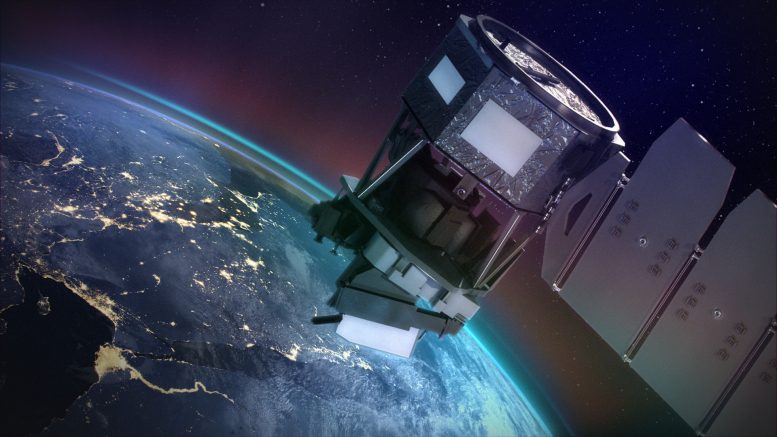
Charged particles in Earth’s atmosphere, which make up the ionosphere, create bands of color above Earth’s surface, known as airglow. ICON, depicted in this artist’s concept, will study the ionosphere from a height of about 350 miles to understand how the combined effects of terrestrial weather and space weather influence ionosphere radiation.
 Charged particles in Earth’s atmosphere, which make up the ionosphere, create bands of color above Earth’s surface, known as airglow. ICON, depicted in this artist’s concept, will study the ionosphere from a height of about 350 miles to understand how the combined effects of terrestrial weather and space weather influence ionosphere radiation.
Unknown
5.0
stars based on
35
reviews
like earth, space has weather. except as opposed to swirling winds and downpours of precipitation, space weather is described through tra...
Charged particles in Earth’s atmosphere, which make up the ionosphere, create bands of color above Earth’s surface, known as airglow. ICON, depicted in this artist’s concept, will study the ionosphere from a height of about 350 miles to understand how the combined effects of terrestrial weather and space weather influence ionosphere radiation.
Unknown
5.0
stars based on
35
reviews
like earth, space has weather. except as opposed to swirling winds and downpours of precipitation, space weather is described through tra...

Subscribe to:
Post Comments (Atom)

EmoticonEmoticon