Tuesday, July 31, 2018

SLIPS Prevents Ice from Sticking on Metal Surfaces discovery posted online as a just well-known manuscript.

new technology keeps any metal surface free of ice and frost
a team of cloth technological know-how engineers from harvard developed slips (slippery liquid infused porous surfaces), a era that may prevent ice sheets from developing on metal surfaces and sliding off resultseasily in the event that they do develop.

cambridge, massachusetts – a team of researchers from harvard university have invented a way to keep any metallic floor free of ice and frost. the dealt with surfaces speedy shed even tiny, incipient condensation droplets or frost genuinely via gravity. the generation prevents ice sheets from developing on surfaces—and any ice that does shape, slides off effects.

the discovery, posted online as a just-well-known-manuscript in acs nano on june 10, has direct implications for a wide style of metal surfaces including the ones used in refrigeration structures, wind turbines, plane, marine vessels, and the development enterprise.

the institution, led with the aid of joanna aizenberg, amy smith berylson professor of substances technology on the harvard college of engineering and applied sciences (seas) and a core faculty member on the wyss institute for biologically stimulated engineering at harvard, previously delivered the idea that it turned into feasible to create a floor that completely averted ice with ice-repellent coatings, inspired with the aid of the water repellent lotus leaf. but this approach can fail under high humidity as the floor textures emerge as lined with condensation and frost.

“the shortage of any practical manner to take away the intrinsic defects and inhomogeneities that contribute to liquid condensation, pinning, freezing, and strong adhesion, have raised the query of whether any solid floor (regardless of its topography or remedy) can ever be genuinely ice-preventive, specially at excessive-humidity, frost-forming conditions,” aizenberg stated.

to combat this hassle, the researchers these days invented a appreciably unique era that is proper for both excessive humidity and severe strain, known as slips (slippery liquid infused porous surfaces). slips are designed to expose a disorder-loose, molecularly flat liquid interface, immobilized through a hidden nanostructured strong. on these ultra easy slippery surfaces fluids and solids alike—inclusive of water drops, condensation, frost, or even solid ice—can slide off without difficulty.

the task was to apply this technology to metallic surfaces, mainly as these substances are ubiquitous in our cutting-edge global, from airplane wings to railings. aizenberg and her team developed a manner to coat the steel with a tough cloth that the lubricant can adhere to. the coating can be finely sculpted to lock in the lubricant and can be applied over a huge scale, on arbitrarily shaped metallic surfaces. similarly, the coating is non-toxic and anti-corrosive.

researchers create ultra slippery anti-ice and anti-frost surfaces
parent 1: still pics extracted from the movies simulating ice formation by deep freezing (-10°c) in excessive humidity circumstance (60% rh) and next deicing through heating.

to demonstrate the robustness of the generation, the researchers efficiently applied it to refrigerator cooling fins and tested it beneath a prolonged, deep freeze circumstance. as compared to existing “frost-free” cooling systems, their innovation absolutely averted frost a ways greater successfully and for a longer time.

“unlike lotus leaf-inspired icephobic surfaces, which fail below high humidity situations, slips-primarily based icephobic materials, as our effects advise, can absolutely save you ice formation at temperatures slightly beneath zero°c even as dramatically decreasing ice accumulation and adhesion under deep freezing, frost-forming situations,” said aizenberg.

similarly to taking into account the green elimination of ice, the era lowers the strength charges related by means of numerous orders of importance. accordingly, the quite simply scalable method to slippery metallic surfaces holds remarkable promise for wide application in the refrigeration and aviation enterprise and in other high-humidity environments in which an icephobic floor is appropriate.

scalable method to immediately coat aluminum surface with nanostructured polymer layer
discern 2: a scalable technique to without delay coat aluminum surface with nanostructured polymer layer ultimately converted right into a slippery liquid-infused porous surface (slips) is proven. slips can correctly postpone ice accumulation and facilitate elimination of ice even beneath excessive humidity situations.

as an example, as soon as their era is carried out to a floor, ice on roofs, wires, outside symptoms, and wind turbines will be easily removed simply by way of tilting, mild agitation, or maybe wind and vibrations.

“this new approach to icephobic materials is a actually disruptive idea that gives a manner to make a transformative impact on power and protection prices related to ice, and we're actively working with the refrigeration and aviation industries to convey it to market,” said aizenberg.

aizenberg is likewise professor of chemistry and chemical biology within the branch of chemistry and chemical biology, and susan s. and kenneth l. wallach professor at the radcliffe institute for advanced have a look at, and director of the kavli institute for bionano science and generation at harvard. her co-authors covered philseok kim, a era improvement fellow at the wyss institute and seas; tak-sing wong of the wyss institute and seas; jack alvarenga of the wyss institute; michael j. kreder of the wyss institute; and wilmer e. adorno-martinez of college of puerto rico.

the authors acquired aid from the materials studies technology and engineering center (mrsec) at harvard underneath nsf award #dmr-1005022. a part of this paintings become completed at the center for nanoscale systems (cns) at harvard supported below nsf award #ecs-0335765. further, the team recognizes the croucher foundation postdoctoral fellowship; the reu bridge, co-funded by way of the guarantee software of the dod in partnership with the nsf reu website online program under nsf provide #dmr-1005022.
Read More

SLIPS Coating Prevents Bacteria from Forming on Solid Surfaces bacteria of the static interface that they need to grip to and use to form biofilms

coating prevents 99 percent of harmful bacteria from forming on surfaces
By applying a technology called SLIPS (slippery-liquid-infused porous surfaces) to solid surfaces, a team of Harvard scientists are able to trick bacteria into thinking they have nowhere to attach to and deprive the bacteria of the static interface that they need to grip to and use to form biofilms.
Biofilms may no longer have any solid ground upon which to stand. A team of Harvard scientists has developed a slick way to prevent the troublesome bacterial communities from ever forming on a surface.
Biofilms stick to just about everything, from copper pipes to steel ship hulls to glass catheters. The slimy coatings are more than simply a nuisance, resulting in decreased energy efficiency, contamination of water and food supplies, and — especially in medical settings — persistent infections. Even cavities in teeth are the unwelcome result of bacterial colonies.
In a study published in the Proceedings of the National Academy of Sciences (PNAS), lead co-authors Joanna Aizenberg, Alexander Epstein, and Tak-Sing Wong coated solid surfaces with an immobilized liquid film to trick the bacteria into thinking they had nowhere to attach and grow.
“People have tried all sorts of things to deter biofilm buildup — textured surfaces, chemical coatings, and antibiotics, for example,” says Aizenberg, Amy Smith Berylson Professor of Materials Science at the Harvard School of Engineering and Applied Sciences (SEAS) and a core faculty member at the Wyss Institute for Biologically Inspired Engineering at Harvard. “In all those cases, the solutions are short-lived at best. The surface treatments wear off, become covered with dirt, or the bacteria even deposit their own coatings on top of the coating intended to prevent them. In the end, bacteria manage to settle and grow on just about any solid surface we can come up with.”
Taking a completely different approach, the researchers used their recently developed technology, dubbed SLIPS (slippery-liquid-infused porous surfaces) to effectively create a hybrid surface that is smooth and slippery due to the liquid layer that is immobilized on it. First described in the Sept. 22, 2011, issue of the journal Nature, the super-slippery surfaces have been shown to repel both water- and oil-based liquids and even to prevent ice or frost from forming.
SLIPS (slippery-liquid-infused porous surfaces)
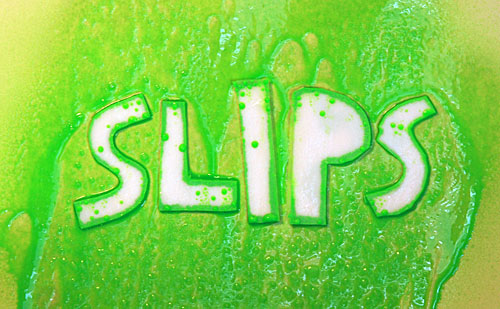
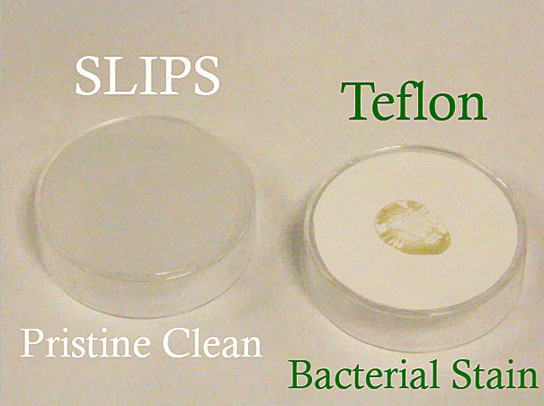
The word “SLIPS” is coated with the SLIPS technology to show its ability to repel liquids and solids and even prevent ice or frost from forming. The slippery discovery has now been shown to prevent more than 99 percent of harmful bacterial slime from forming on surfaces. Image courtesy of Joanna Aizenberg, Rebecca Belisle, and Tak-Sing Wong
“By creating a liquid-infused structured surface, we deprive bacteria of the static interface they need to get a grip and grow together into biofilms,” says Epstein, a recent Ph.D. graduate who worked in Aizenberg’s lab at the time of the study.
“In essence, we turned a once bacteria-friendly solid surface into a liquid one. As a result, biofilms cannot cling to the material, and even if they do form, they easily ‘slip’ off under mild flow conditions,” adds Wong, a researcher at SEAS and a Croucher Foundation Postdoctoral Fellow at the Wyss Institute.
Aizenberg and her collaborators reported that SLIPS reduced by 96 to 99 percent the formation of three of the most notorious, disease-causing biofilms — Pseudomonas aeruginosa, Escherichia coli, and Staphylococcus aureus — over a seven-day period.
The technology works in both a static environment and under flow, or natural conditions, making it ideally suited for coating implanted medical devices that interact with bodily fluids. The coated surfaces can also combat bacterial growth in environments with extreme pH levels, intense ultraviolet light, and high salinity.
SLIPS is also nontoxic, readily scalable, and most importantly, self-cleaning, needing nothing more than gravity or a gentle flow of liquid to stay unsoiled. As previously demonstrated with a wide variety of liquids and solids, including blood, oil, and ice, everything seems to slip off surfaces treated with the technology.
To date, this may be the first successful test of a nontoxic synthetic surface that can almost completely prevent the formation of biofilms over an extended period of time. The approach may find applications in medical, industrial, and consumer products and settings.
In future studies, the researchers aim to better understand the mechanisms involved in preventing biofilms. In particular, they are interested in whether any bacteria transiently attach to the interface and then slip off, if they just float above the surface, or if any individuals can remain loosely attached.
“Biofilms have been amazing at outsmarting us. And even when we can attack them, we often make the situation worse with toxins or chemicals. With some very cool, nature-inspired design tricks, we are excited about the possibility that biofilms may have finally met their match,” concludes Aizenberg.
Aizenberg and Epstein’s co-authors included Rebecca A. Belisle, research fellow at SEAS, and Emily Marie Boggs ’13, an undergraduate biomedical engineering concentrator at Harvard College. The authors acknowledge support from the Department of Defense Office of Naval Research; the Croucher Foundation; and the Wyss Institute for Biologically Inspired Engineering at Harvard University.
with the aid of making use of a generation referred to as slips (slippery-liquid-infused porous surfaces) to solid surfaces, a group of harvard scientists are able to trick bacteria into wondering they've nowhere to attach to and deprive the bacteria of the static interface that they want to grip to and use to shape biofilms.

biofilms may also no longer have any stable floor upon which to face. a team of harvard scientists has evolved a slick way to prevent the tough bacterial communities from ever forming on a floor.

biofilms stick to just about the entirety, from copper pipes to metal ship hulls to glass catheters. the slimy coatings are greater than truely a nuisance, resulting in decreased power efficiency, infection of water and meals components, and — particularly in medical settings — chronic infections. even cavities in teeth are the unwelcome end result of bacterial colonies.

in a take a look at published in the lawsuits of the countrywide academy of sciences (pnas), lead co-authors joanna aizenberg, alexander epstein, and tak-sing wong coated solid surfaces with an immobilized liquid film to trick the micro organism into questioning they had nowhere to connect and grow.

“humans have attempted all types of matters to deter biofilm buildup — textured surfaces, chemical coatings, and antibiotics, as an example,” says aizenberg, amy smith berylson professor of materials technology at the harvard college of engineering and applied sciences (seas) and a core college member at the wyss institute for biologically inspired engineering at harvard. “in all the ones cases, the answers are short-lived at nice. the floor remedies put on off, emerge as blanketed with dirt, or the micro organism even deposit their very own coatings on top of the coating intended to prevent them. in the end, bacteria manage to settle and grow on pretty much any solid surface we are able to provide you with.”

taking a very one of a kind technique, the researchers used their lately developed technology, dubbed slips (slippery-liquid-infused porous surfaces) to successfully create a hybrid floor this is easy and slippery because of the liquid layer this is immobilized on it. first described inside the sept. 22, 2011, problem of the magazine nature, the superb-slippery surfaces have been shown to repel each water- and oil-based totally liquids and even to prevent ice or frost from forming.

slips (slippery-liquid-infused porous surfaces)
the phrase “slips” is coated with the slips generation to reveal its ability to repel liquids and solids or even prevent ice or frost from forming. the slippery discovery has now been proven to prevent greater than ninety nine percent of dangerous bacterial slime from forming on surfaces. picture courtesy of joanna aizenberg, rebecca belisle, and tak-sing wong

“by using growing a liquid-infused established floor, we deprive micro organism of the static interface they need to get a grip and develop together into biofilms,” says epstein, a latest ph.d. graduate who labored in aizenberg’s lab at the time of the look at.

“in essence, we became a once bacteria-friendly solid surface right into a liquid one. as a end result, biofilms can not hang to the material, and even in the event that they do form, they easily ‘slip’ off underneath mild waft situations,” adds wong, a researcher at seas and a croucher basis postdoctoral fellow at the wyss institute.

aizenberg and her collaborators stated that slips decreased via 96 to ninety nine percentage the formation of 3 of the maximum infamous, ailment-causing biofilms — pseudomonas aeruginosa, escherichia coli, and staphylococcus aureus — over a seven-day length.

the generation works in each a static environment and underneath go with the flow, or natural conditions, making it ideally fitted for coating implanted scientific devices that have interaction with physical fluids. the lined surfaces also can fight bacterial boom in environments with extreme ph stages, intense ultraviolet mild, and high salinity.

slips is also secure, effortlessly scalable, and most importantly, self-cleansing, needing not anything extra than gravity or a mild drift of liquid to stay unsoiled. as formerly demonstrated with a wide type of beverages and solids, such as blood, oil, and ice, the whole lot seems to slide off surfaces treated with the era.

so far, this may be the first a hit test of a trustworthy synthetic surface that could nearly absolutely prevent the formation of biofilms over an extended period of time. the method may also discover packages in medical, business, and customer merchandise and settings.

in future research, the researchers aim to higher understand the mechanisms involved in preventing biofilms. particularly, they are interested in whether or not any micro organism transiently connect to the interface after which slip off, in the event that they just waft above the floor, or if any individuals can continue to be loosely connected.

“biofilms had been excellent at outsmarting us. or even whilst we will assault them, we frequently make the scenario worse with pollution or chemical compounds. with a few very cool, nature-stimulated design tricks, we are enthusiastic about the possibility that biofilms may also have subsequently met their suit,” concludes aizenberg.

aizenberg and epstein’s co-authors covered rebecca a. belisle, research fellow at seas, and emily marie boggs ’13, an undergraduate biomedical engineering concentrator at harvard college. the authors acknowledge guide from the branch of protection office of naval studies; the croucher foundation; and the wyss institute for biologically stimulated engineering at harvard university.
Read More

New ‘Superglass’ Coating Repels Liquids and is Capable of Self-Repair aizenberg the amy smith berylson professor of materials.

New Coating Creates Superglass
a brand new transparent, bioinspired coating makes ordinary glass hard, self-cleaning, and relatively slippery, a crew from harvard university said on-line july 31 in nature communications.

the new coating might be used to create long lasting, scratch-resistant lenses for eyeglasses, self-cleaning windows, stepped forward solar panels, and new medical diagnostic gadgets, stated important investigator joanna aizenberg, the amy smith berylson professor of materials technological know-how within the harvard school of engineering and implemented sciences (seas), a core faculty member at the wyss institute for biologically inspired engineering, and professor of chemistry and chemical biology.

the new coating builds on an award-winning technology pioneered by way of aizenberg and her team called slippery liquid-infused porous surfaces (slips) — the slipperiest synthetic floor regarded. the new coating is equally slippery, but a great deal more long lasting and fully obvious. collectively those advances clear up longstanding demanding situations in developing commercially beneficial materials that repel nearly the whole thing.

researchers create ultraslippery coating for glass
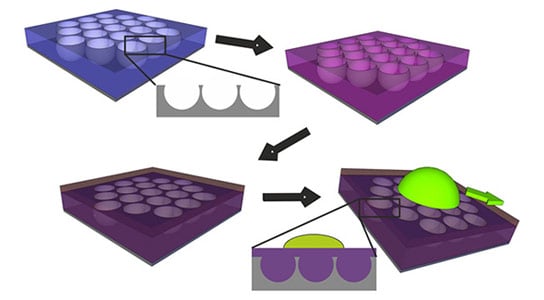
the tiny, tightly packed cells of the honeycomb structure, shown right here in this electron micrograph, make the slips coating fairly durable.

slips was stimulated with the aid of the slick approach of the carnivorous pitcher plant, which lures bugs onto the ultraslippery surface of its leaves, wherein they slide to their doom. unlike earlier water-repelling substances, slips repels oil and sticky drinks like honey, and it resists ice formation and bacterial biofilms as well.

while slips was an crucial boost, it turned into additionally “a evidence of principle” — step one towards a commercially precious generation, stated lead creator nicolas vogel, a postdoctoral fellow in applied physics at seas.

“slips repels each oily and aqueous beverages however it’s steeply-priced to make and now not transparent,” vogel stated.

the unique slips substances additionally need to be fixed somehow to existing surfaces, which is regularly tough.

“it might be easier to take the prevailing surface and treat it in a positive way to make it slippery,” vogel defined.


materials scientists at harvard university have created an ultraslippery cloth referred to as slips. those high-quality-repellent, transparent home windows can efficaciously repel wine, olive oil, and ketchup, at the same time as the surrounding surfaces come to be notably stained. the cloth additionally resists heavy-duty oil, water, and ice.

vogel, aizenberg, and their colleagues sought to increase a coating that completed this and worked as slips does. slips’ skinny layer of liquid lubricant permits beverages to glide effortlessly over the floor, plenty as a skinny layer of water in an ice rink facilitates an ice skater flow.

to create a slips-like coating, the researchers corral a set of tiny spherical debris of polystyrene, the principle factor of styrofoam, on a flat glass floor like a collection of pingpong balls. they pour liquid glass on them until the balls are extra than half buried. after the glass solidifies, they burn away the beads, leaving a network of craters that resembles a honeycomb. they then coat that honeycomb with the identical liquid lubricant used in slips to create a tough however slippery coating.

“the honeycomb shape is what confers the mechanical balance to the new coating,” stated aizenberg.

by means of adjusting the width of the honeycomb cells to make their diameter a whole lot smaller than the wavelength of visible light, the researchers kept the coating from reflecting light. this made a tumbler slide with the coating completely obvious.

the covered glass slides repelled a variety of drinks, just as slips does, which include water, octane, wine, olive oil and ketchup. and, like slips, the coating reduced the adhesion of ice to a glass slide through ninety nine percent. retaining materials frost-unfastened is important, given that adhered ice can take down strength strains, decrease the electricity efficiency of cooling systems, put off airplanes, and lead buildings to collapse.

importantly, the honeycomb shape of the slips coating on the glass slides confers unrivaled mechanical robustness. it withstood harm and remained slippery after remedies that often scratched and compromised regular glass surfaces and other popular liquid-repellent substances, inclusive of touching, peeling off a chunk of tape, and wiping with a tissue.

“we set ourselves a tough goal: to design a flexible coating that’s as appropriate as slips however much less complicated to apply, obvious, and plenty tougher — and that's what we controlled,” aizenberg said.

the team is now honing its approach to better coat curved portions of glass in addition to clear plastics inclusive of plexiglas, and to evolve the approach for the pains of producing.

“joanna’s new slips coating reveals the energy of following nature’s lead in growing new technologies,” said donald e. ingber, founding director of the wyss institute, professor of bioengineering at seas, and judah folkman professor of vascular biology at harvard medical school and boston kids’s hospital, a harvard affiliate. “we are enthusiastic about the range of applications that might use this innovative coating.”

this paintings turned into funded by way of the advanced research initiatives corporation — power (arpa-e), the air pressure workplace of medical research, and the wyss institute. vogel acquired investment from the leopoldina fellowship software. further to vogel and aizenberg, the studies crew covered: rebecca a. belisle, a former wyss research assistant who is now a graduate student in substances technological know-how and engineering at stanford university; benjamin hatton, previously a studies appointee at seas and a era improvement fellow at the wyss institute who is now an assistant professor of materials technological know-how and engineering on the college of toronto; and tak-sing wong, a former postdoctoral research fellow on the wyss institute who is now an assistant professor of mechanical and nuclear engineering at pennsylvania country college.
Read More

LiquiGlide Nonstick Coating Coming to Consumer Goods nonstick cating to a prime customer items enterprise.

LiquiGlide Nonstick Coating Ready for Consumer Goods
the days of wasting condiments — and other products — that stick stubbornly to the perimeters of their bottles can be long past, way to mit spinout liquiglide, which has licensed its nonstick coating to a prime customer-items enterprise.

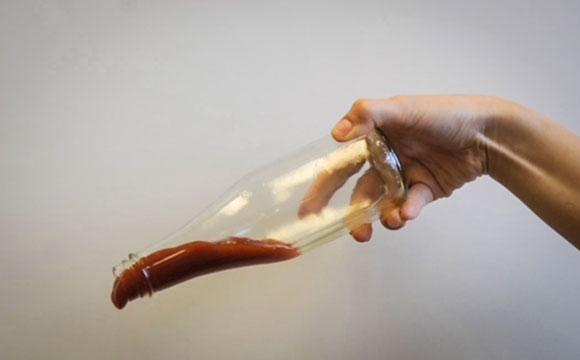
evolved in 2009 by means of mit’s kripa varanasi and david smith, liquiglide is a liquid-impregnated coating that acts as a slippery barrier among a floor and a viscous liquid. implemented interior a condiment bottle, as an example, the coating clings completely to its aspects, at the same time as allowing the condiment to glide off absolutely, and not using a residue.

in 2012, amidst a flurry of media attention following liquiglide’s access in mit’s $100k entrepreneurship opposition, smith and varanasi founded the startup — with assist from the institute — to commercialize the coating.

today, norwegian consumer-items producer orkla has signed a licensing settlement to apply the liquiglide’s coating for mayonnaise merchandise offered in germany, scandinavia, and numerous different eu international locations. this comes on the heels of every other licensing deal, with elmer’s, introduced in march.

but that is most effective the start, says varanasi, an companion professor of mechanical engineering who is now on liquiglide’s board of directors and chief technological know-how consultant. the startup, which simply entered the customer-goods marketplace, is dating offers with severa producers of meals, splendor supplies, and household products. “our coatings can work with a whole variety of products, due to the fact we can tailor each coating to meet the specific requirements of every utility,” varanasi says.


study the science behind liquiglide’s completely wet coating and notice it in motion. video: melanie gonick/mit

aside from supplying financial savings and comfort, liquiglide targets to reduce the surprising amount of wasted products — especially meals — that persist with field aspects and get tossed. as an example, in 2009 customer reviews observed that up to fifteen percentage of bottled condiments are in the end thrown away. retaining bottles easy, varanasi adds, may also significantly cut the usage of water and strength, in addition to the charges associated with rinsing bottles earlier than recycling. “it has big potential in terms of essential sustainability,” he says.

varanasi says liquiglide pursuits next to tackle buildup in oil and gasoline pipelines, that may cause corrosion and clogs that lessen float. destiny uses, he provides, ought to include coatings for medical devices such as catheters, deicing roofs and airplane wings, and enhancing manufacturing and technique performance. “interfaces are ubiquitous,” he says. “we need to be anywhere.”

liquid-impregnated surfaces

liquiglide became initially advanced at the same time as smith labored on his graduate research in varanasi’s studies institution. smith and varanasi have been inquisitive about preventing ice buildup on plane surfaces and methane hydrate buildup in oil and gasoline pipelines.

a few preliminary work became on superhydrophobic surfaces, which trap pockets of air and naturally repel water. however each researchers discovered that those surfaces don’t, in truth, shed each little bit of liquid. for the duration of segment transitions — while vapor turns to liquid, for example — water droplets condense within microscopic gaps on surfaces, and gradually gather. this leads to lack of anti-icing houses of the floor. “something that is nonwetting to macroscopic drops does not continue to be nonwetting for microscopic drops,” varanasi says.

inspired by using the work of researcher david quéré, of espci in paris, on slippery “hemisolid-hemiliquid” surfaces, varanasi and smith invented permanently moist “liquid-impregnated surfaces” — coatings that dont have such microscopic gaps. the coatings include textured stable cloth that traps a liquid lubricant thru capillary and intermolecular forces. the coating wicks through the textured solid surface, clinging completely beneath the product, permitting the product to slide off the surface easily; different materials can’t input the gaps or displace the coating. “you'll say that it’s a self-lubricating floor,” varanasi says.

mixing and matching the substances, but, is a complex system, varanasi says. liquid additives of the coating, as an example, need to be well matched with the chemical and physical properties of the sticky product, and usually immiscible. the stable cloth have to form a textured structure at the same time as adhering to the container. and the coating can’t destroy the contents: foodstuffs, as an instance, require safe, safe to eat substances, along with vegetation and insoluble fibers.

to help choose components, smith and varanasi advanced the simple clinical ideas and algorithms that calculate how the liquid and solid coating substances, and the product, as well as the geometry of the surface systems will all have interaction to discover the most advantageous “recipe.”

nowadays, liquiglide develops coatings for clients and licenses the recipes to them. covered are commands that detail the substances, device, and method required to create and follow the coating for his or her precise wishes. “the state of the coating we come to be with depends entirely at the houses of the product you want to slide over the surface,” says smith, now liquiglide’s ceo.

having researched substances for hundreds of different viscous liquids through the years — from peanut butter to crude oil to blood — liquiglide additionally has a database of most suitable ingredients for its algorithms to drag from when customizing recipes. “given any new product you want liquiglide for, we are able to zero in on a solution that meets all necessities essential,” varanasi says.

mit: a lab for marketers

for years, smith and varanasi toyed around with commercial programs for liquiglide. but in 2012, with assist from mit’s entrepreneurial environment, liquiglide went from lab to market in a rely of months.

first of all the idea turned into to deliver coatings to the oil and fuel enterprise. however someday, in early 2012, varanasi saw his wife struggling to pour honey from its box. “and that i idea, ‘we've got a solution for that,’” varanasi says.

the point of interest then have become customer packaging. smith and varanasi took the concept thru numerous entrepreneurship training — consisting of 6.933 (entrepreneurship in engineering: the founder’s adventure) — and mit’s task mentoring service and innovation groups, wherein pupil teams studies the economic capability of mit technology.

“i did quite tons each closing factor you may do,” smith says. “due to the fact we've got the sort of notable community right here at mit, i concept i should take gain of it.”

which could, smith, varanasi, and several mit students entered liquiglide in the mit $100k entrepreneurship competition, incomes the target market desire award — and the country wide spotlight. a video of ketchup sliding out of a liquiglide-covered bottle went viral. severa media outlets picked up the tale, while masses of corporations reached out to varanasi to buy the coating. “my cellphone didn’t forestall ringing, my website crashed for a month,” varanasi says. “it just went crazy.”

that summer season, smith and varanasi took their startup concept to mit’s international founders’ skills accelerator application, which delivered them to a strong network of local buyers and helped them construct a solid business plan. soon after, they raised money from family and friends, and received $a hundred,000 at the masschallenge entrepreneurship competition.

while liquiglide inc. released in august 2012, customers were already flattening the door. the startup chose a pick variety to pay for the development and trying out of the coating for its products. within a year, liquiglide turned into cash-waft superb, and had grown from 3 to 18 personnel in its modern-day cambridge headquarters.

searching again, varanasi attributes an awful lot of liquiglide’s success to mit’s innovation-based totally atmosphere, which promotes fast prototyping for the market through experimentation and collaboration. this environment consists of the deshpande middle for technological innovation, the martin agree with middle for mit entrepreneurship, the venture mentoring service, and the generation licensing office, among different initiatives. “having a lab in which we could reflect onconsideration on … translating the technology to real-world programs, and having this capability to satisfy human beings, and soar ideas … that whole mit environment become key,” varanasi says.
Read More

Engineers Develop New System to Provide Low-Cost Drinking Water varanasi imaginative.

New System for Low Cost Source of Drinking Water
a brand new device devised with the aid of mit engineers may want to offer a low-price supply of ingesting water for parched towns round the arena even as additionally reducing energy plant operating fees.

approximately 39 percentage of all the fresh water withdrawn from rivers, lakes, and reservoirs inside the u.s. is earmarked for the cooling desires of electric energy vegetation that use fossil fuels or nuclear power, and much of that water ends up floating away in clouds of vapor. but the new mit machine could doubtlessly keep a sizeable fraction of that misplaced water — and could even become a widespread supply of clean, safe ingesting water for coastal towns where seawater is used to cool neighborhood strength plants.

the precept at the back of the new concept is deceptively simple: while air that’s wealthy in fog is zapped with a beam of electrically charged debris, referred to as ions, water droplets grow to be electrically charged and accordingly can be drawn closer to a mesh of wires, much like a window display screen, positioned of their direction. the droplets then collect on that mesh, drain down right into a accumulating pan, and may be reused within the electricity plant or sent to a metropolis’s water supply device.

the machine, that is the basis for a startup corporation known as countless cooling that final month received mit’s $100k entrepreneurship opposition, is described in a paper posted today within the journal technology advances, co-authored by means of maher damak phd ’18 and companion professor of mechanical engineering kripa varanasi. damak and varanasi are among the co-founders of the startup.


varanasi’s imaginative and prescient changed into to broaden surprisingly green water restoration systems by taking pictures water droplets from both herbal fog and plumes of industrial cooling towers. the venture began as part of damak’s doctoral thesis, which aimed to enhance the performance of fog-harvesting structures which are used in many water-scarce coastal regions as a supply of potable water. those structures, which usually encompass a few form of plastic or metallic mesh hung vertically inside the path of fogbanks that frequently roll in from the ocean, are extremely inefficient, shooting simplest approximately 1 to 3 percent of the water droplets that pass via them. varanasi and damak wondered if there has been a way to make the mesh trap extra of the droplets — and observed a completely simple and powerful way of doing so.

the motive for the inefficiency of current structures have become obvious within the group’s targeted lab experiments: the problem is within the aerodynamics of the device. as a move of air passes an impediment, along with the wires in these mesh fog-catching displays, the airflow naturally deviates around the obstacle, a whole lot as air flowing around an aircraft wing separates into streams that pass above and beneath the wing structure. these deviating airstreams bring droplets that have been heading closer to the wire off to the facet, until they have been headed bang-on in the direction of the wire’s middle.

the result is that the fraction of droplets captured is a ways decrease than the fraction of the collection location occupied through the wires, due to the fact droplets are being swept apart from wires that lie in the front of them. simply making the wires larger or the areas in the mesh smaller tends to be counterproductive as it hampers the general airflow, ensuing in a internet decrease in collection.

new machine for low fee supply of drinking water
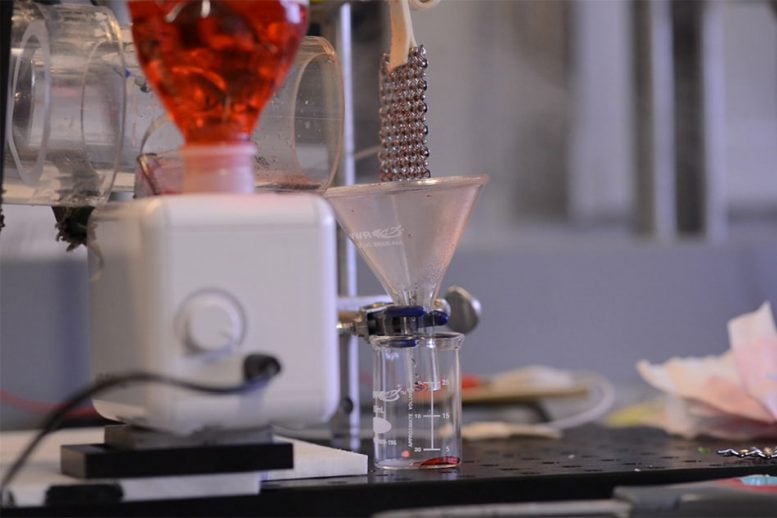
the group’s lab setup turned into used to test the powerplant condenser gadget. the mesh is positioned above the funnel at proper to collect the water that condenses at the mesh. courtesy of researchers

but when the incoming fog gets zapped first with an ion beam, the alternative impact happens. no longer only do all of the droplets that are inside the direction of the wires land on them, even droplets that were aiming for the holes within the mesh get pulled in the direction of the wires. this device can consequently capture a much large fraction of the droplets passing thru. as such, it may dramatically enhance the efficiency of fog-catching systems, and at a relatively low price. the system is easy, and the quantity of strength required is minimum.

next, the team targeted on shooting water from the plumes of strength plant cooling towers. there, the movement of water vapor is a great deal greater focused than any clearly occurring fog, and that makes the device even extra efficient. and on account that shooting evaporated water is in itself a distillation process, the water captured is natural, despite the fact that the cooling water is salty or infected. at this point, karim khalil, every other graduate scholar from varanasi’s lab joined the group.

“it’s distilled water, that is of better nice, that’s now simply wasted,” says varanasi. “that’s what we’re looking to capture.” the water may be piped to a metropolis’s consuming water device, or used in procedures that require natural water, together with in a power plant’s boilers, rather than being used in its cooling system in which water quality doesn’t matter a great deal.

an ordinary six hundred-megawatt strength plant, varanasi says, could seize a hundred and fifty million gallons of water a yr, representing a price of hundreds of thousands of dollars. this represents about 20 to 30 percent of the water lost from cooling towers. with similarly refinements, the system may be able to seize even more of the output, he says.

what’s more, seeing that electricity plants are already in area alongside many arid coastlines, and many of them are cooled with seawater, this affords a completely simple manner to offer water desalination services at a tiny fraction of the price of constructing a standalone desalination plant. damak and varanasi estimate that the installation value of any such conversion might be about one-1/3 that of a building a brand new desalination plant, and its running costs might be approximately 1/50. the payback time for putting in this type of system might be approximately  years, varanasi says, and it'd have basically no environmental footprint, including not anything to that of the original plant.

“this can be a extraordinary option to cope with the global water crisis,” varanasi says. “it can offset the need for approximately 70 percentage of new desalination plant installations inside the subsequent decade.”

in a chain of dramatic proof-of-idea experiments, damak, khalil, and varanasi validated the idea by using building a small lab model of a stack emitting a plume of water droplets, just like the ones seen on real strength plant cooling towers, and positioned their ion beam and mesh screen on it. in video of the test, a thick plume of fog droplets is visible growing from the tool — and nearly right away disappears as soon because the device is switched on.

the group is currently building a full-scale test model of their system to be placed at the cooling tower of mit’s critical application plant, a herbal-fuel cogeneration electricity plant that provides maximum of the campus’ strength, heating, and cooling. the setup is expected to be in location through the quit of the summer time and could undergo trying out inside the fall. the exams will consist of trying exceptional versions of the mesh and its helping structure, damak says.

that should provide the wished evidence to permit strength plant operators, who tend to be conservative of their technology choices, to adopt the gadget. due to the fact power vegetation have many years-lengthy working lifetimes, their operators generally tend to “be very chance-averse” and need to understand “has this been carried out some place else?” varanasi says. the campus power plant assessments will not most effective “de-danger” the generation, but can even assist the mit campus improve its water footprint, he says. “this can have a excessive impact on water use on campus.”
Read More

Sunday, July 22, 2018

Engineers Create Sustainable Concrete That Reduces Energy Demand, Greenhouse Emissions department of civil and enviromental engineering.

New Coal Concrete Reduces Energy Demand and Greenhouse Emissions
the advance tackles two main environmental issues right away by using coal production waste and by means of substantially reducing the environmental impact of concrete production.

xianming shi, accomplice professor in wsu’s department of civil and environmental engineering, and graduate student gang xu, have developed a robust, durable concrete that uses fly ash as a binder and gets rid of the use of environmentally extensive cement. they record on their paintings within the august issue of the journal, gas.

reduces power demand, greenhouse emissions

manufacturing of traditional concrete, that is made with the aid of combining cement with sand and gravel, contributes among 5 and 8 percentage of greenhouse fuel emissions global. that’s due to the fact cement, the important thing factor in concrete, calls for high temperatures and a tremendous amount of energy to supply.

fly ash, the fabric that remains after coal dirt is burned, meanwhile has become a substantial waste management trouble within the america. greater than 50 percentage of fly ash finally ends up in landfills, where it could without difficulty leach into the nearby environment.

whilst some researchers have used fly ash in concrete, they haven’t been able to dispose of the acute heating techniques which are historically needed to make a robust fabric.

“our production technique does not require heating or the usage of any cement,” stated xu.

molecular engineering

this paintings is likewise sizable because the researchers are the usage of nano-sized materials to engineer concrete on the molecular level.

“to sustainably enhance the development enterprise, we need to utilize the ‘backside-up’ functionality of nanomaterials,” said shi.

the group used graphene oxide, a currently determined nanomaterial, to control the response of fly ash with water and turn the activated fly ash right into a sturdy cement-like fabric. the graphene oxide rearranges atoms and molecules in a solution of fly ash and chemical activators like sodium silicate and calcium oxide. the procedure creates a calcium-aluminate-silicate-hydrate molecule chain with strongly bonded atoms that form an inorganic polymer network extra long lasting than (hydrated) cement.

aids groundwater, mitigates flooding

the group designed the fly ash concrete to be pervious, which means that water can bypass through it to top off groundwater and to mitigate flooding potential.

researchers have confirmed the power and behavior of the material in check plots on the wsu campus underneath a ramification of load and temperature situations. they're still conducting infiltration tests and accumulating information the use of sensors buried beneath the concrete. they in the end desire to commercialize the patented era.

“after similarly trying out, we would really like to build a few structures with this concrete to function a proof of idea,” stated xu.
Read More

Sunday, July 8, 2018

Pinning down the mass of a galaxy may seem like an esoteric undertaking, but scientists think it holds the key to unraveling the nature of the elusive, yet-to-be-seen dark matter, and the fabric of our cosmos figuring out the mass of galzxies.


a brand new approach for estimating the mass of galaxies promises extra reliable consequences, in particular whilst implemented to huge datasets generated via contemporary and destiny surveys, in line with a studies group led by using ekta patel at the college of arizona. published in the astrophysical magazine, the study is the primary to mix the discovered complete three-dimensional motions of several of the milky way's satellite tv for pc galaxies with widespread pc simulations to acquire a high-accuracy estimate for the mass of our home galaxy.

figuring out the mass of galaxies plays a essential element in unraveling fundamental mysteries about the architecture of the universe. according to modern-day cosmological models, a galaxy's visible rely, which include stars, gasoline and dirt, money owed for an insignificant 15 percentage of its mass. the final eighty five percent is assumed to live in darkish be counted, a mysterious aspect that never has been discovered and whose physical properties continue to be largely unknown. the sizeable majority of a galaxy's mass (generally dark remember) is placed in its halo, a tremendous, surrounding location containing few, if any, stars and whose form is basically unknown.

in a widely popular cosmological model, dark-depend filaments span the complete universe, drawing luminous ("regular") count with them. wherein they intersect, fuel and dirt acquire and coalesce into galaxies. over billions of years, small galaxies merge to shape into larger ones, and as those grow in size and their gravitational pull reaches farther and farther into area, they entice a zoo of different small galaxies, which then turn out to be satellite tv for pc galaxies. their orbits are determined via their host galaxy, similar to the sun's gravitational pull directs the motion of planets and bodies inside the solar machine.

"we now know that the universe is increasing," says patel, a fourth-year graduate scholar in the ua's branch of astronomy and steward observatory. "but when  galaxies come near sufficient, their mutual enchantment is extra than the have an impact on of the expanding universe, in order that they start to orbit each different around a common center, like our milky way and our closest neighbor, the andromeda galaxy."

even though andromeda is drawing close the milky manner at a hundred and ten kilometers per second, the 2 won't merge till approximately four.5 billion years from now. in step with patel, monitoring andromeda's movement is "equal to looking a human hair grow at the distance of the moon."

as it's not possible to "weigh" a galaxy certainly by looking at it -- a good deal less whilst the observer happens to be interior of it, as is the case with our milky way -- researchers deduce a galaxy's mass via reading the motions of celestial gadgets as they dance around the host galaxy, led with the aid of its gravitational pull. such gadgets -- also called tracers, due to the fact they trace the mass in their host galaxy -- may be satellite galaxies or streams of stars made from the scattering of former galaxies that came too close to remain intact.

unlike preceding methods commonly used to estimate a galaxy's mass, such as measuring its tracers' velocities and positions, the technique developed by patel and her co-authors uses their angular momentum, which yields more reliable consequences as it would not change over the years. the angular momentum of a frame in space relies upon on both its distance and speed. on the grounds that satellite tv for pc galaxies have a tendency to move across the milky way in elliptical orbits, their speeds increase as they get in the direction of our galaxy and decrease as they get farther away. due to the fact the angular momentum is the manufactured from each position and pace, there may be no net change no matter whether the tracer is at its closest or farthest position in its orbit.

"consider a figure skater doing a pirouette," patel says. "as she draws in her arms, she spins faster. in other phrases, her pace adjustments, however her angular momentum stays the identical over the entire period of her act."

the observe, which patel gives on thursday, june 7, on the 232nd assembly of the of the american astronomical society in denver, is the first to take a look at the overall 3-dimensional motions of 9 of the milky manner's 50 regarded satellite galaxies right now and examine their angular momentum measurements to a simulated universe containing a complete of 20,000 host galaxies that resemble our own galaxy. together those simulated galaxies host about 90,000 satellite galaxies.

patel's group pinned down the milky manner's mass at zero.96 trillion solar masses. previous estimates had positioned our galaxy's mass among 700 billion and a couple of trillion solar hundreds. the effects also support estimates suggesting that the andromeda galaxy (m31) is greater huge than our milky way.

the authors wish to apply their technique to the ever-developing information as they become to be had by contemporary and destiny galactic surveys consisting of the gaia space observatory and lsst, the massive synoptic survey telescope. consistent with co-creator gurtina besla, an assistant professor of astronomy at the ua, constraints on the mass of the milky manner will improve as new observations are received that clock the speed of greater satellite galaxies, and as next-generation simulations will provide higher decision, allowing scientists to get better facts for the smallest mass tracers, the so-called ultra-faint galaxies.

"our method permits us to take gain of measurements of the velocity of a couple of satellite galaxies simultaneously to get a solution for what bloodless dark be counted principle could expect for the mass of the milky manner's halo in a strong manner," besla says. "it is ideally suited to take benefit of the modern rapid increase in each observational datasets and numerical abilities."
Read More